
Haarlem: Apartments, Rooms, Studios and Houses for Rent
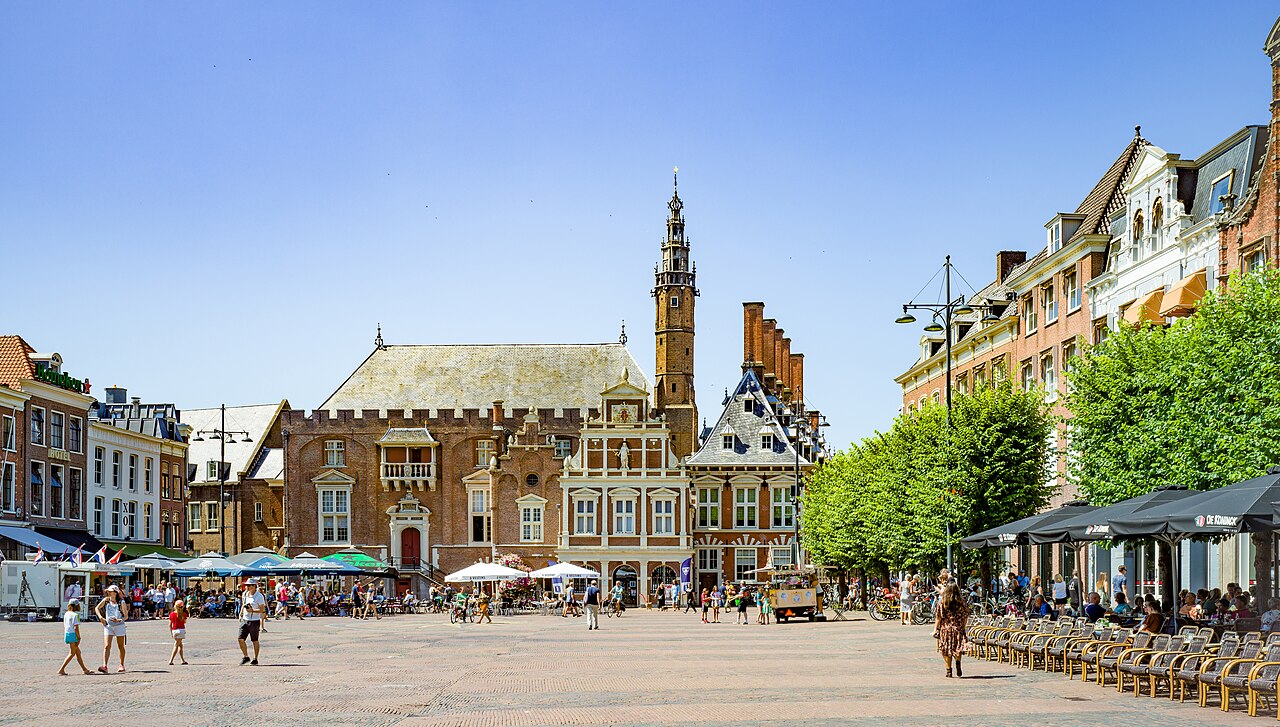
Source: Grote Markt Stadthuis Harlem.jpg, CC BY-SA 4.0 via Wikimedia Commons
Apartments, Rooms, Studios and Houses for Rent in Haarlem
Haarlem does not pretend to be Amsterdam, and that is precisely why half of its renters used to live there. This is the release valve for a capital that stopped having room for the people who work in it: a fifteen-minute train ride from Amsterdam Centraal, a compact historic centre that photographs like a Golden Age painting, and a beach at Zandvoort ten minutes the other direction. None of that is a secret, which is the problem. Everyone priced out of Amsterdam had the same idea, and a lot of them landed here first.
The municipality counts close to 169,000 residents, and its housing pressure has a different engine from a classic student town: there is no large university of its own emptying tens of thousands of first-years onto the streets every September the way Tilburg or Groningen do. What Haarlem has instead is a steady, year-round flow of Amsterdam refugees, second-home buyers turned landlords, students commuting to campuses in Amsterdam or Leiden, and professionals who work in the capital but decided they would rather come home to a canal than a ring road. That mix is arguably harder to plan around than a predictable academic intake, because it never really lets up.
That relentlessness is where AnyHouse earns its keep. Instead of leaving you to refresh the same handful of sites on a loop, it keeps watch across 400-plus rental platforms at once, pings you the moment a matching home appears, holds your shortlist and applications in one place, and can lodge applications for you against the preferences you set.
Haarlem rentals: the short version
- What things cost: a room averages roughly €750-820/month and a studio around €900-950. A typical one-bedroom apartment sits near €1,600, though the wider apartment band runs €1,300 to €2,200 once you fold in bigger and furnished free-sector flats, and family houses run higher again. These sit close to Amsterdam-satellite pricing, not typical Dutch provincial pricing.
- Red flag one: a landlord who cannot show you the flat because they are “travelling” and wants a transfer before any viewing or contract.
- Red flag two: a price that looks generous next to Amsterdam but is still well above what the same home would legally command under the national points system.
- Do this first: decide whether you actually need Haarlem itself, or just need to be near it. Heemstede and Bloemendaal are minutes away and change your options considerably.
- Before you sign: run the address through the Huurcommissie rent check, because in this city “cheaper than Amsterdam” and “legal” are two different claims (details further down).
Fresh rentals in Haarlem
Listings matched to your location and budget
 Apartment
 Apartment
 Apartment
 House
HouseYour next Haarlem rental might appear today.
AnyHouse helps you see it faster.
Get instant rental alerts in Haarlem
Current Haarlem Rental Market
Public figures on Haarlem disagree with each other more than usual, and the reason is not sloppy data, it is that “average rent” hides which slice of the market a platform is actually counting. Count only smaller one-bedroom flats and the typical apartment lands near €1,600 a month, which is roughly where Kamernet and the listing trackers put it, alongside rooms around €750-820 and studios near €900-950. Widen the lens to include larger, two-bedroom and furnished free-sector homes, which is what Pararius is weighted toward, and the same city reads closer to €1,700-2,000 and up. Neither figure is wrong; each is simply built from a different pool of properties, so treat every number here as a band rather than a promise and expect the live listings to move faster than any published average.
The honest comparison point is Amsterdam, not the rest of the Netherlands. Multiple market trackers put Haarlem rent somewhere in the order of 10 to 20 percent below the capital, which sounds like a discount until you remember what it is a discount from. A flat that would be unremarkable in Utrecht or Nijmegen counts as a bargain here purely because Amsterdam has recalibrated everyone’s sense of normal.
So work in ranges, and treat each property type as its own hunt. A room in Schalkwijk, a studio near the station, a two-bedroom in Kleverpark and a house in Heemstede are four separate markets with four separate timelines, and lumping them into one “Haarlem average” will mislead you more than it helps.
| Property type | Average rent | Typical range | Best for |
|---|---|---|---|
| Room | €780/month | €650-950/month | Young professionals / budget renters |
| Studio | €950/month | €800-1,300/month | Solo renters / internationals |
| Apartment | €1,600/month | €1,300-2,200/month | Couples / commuting professionals |
| House | €2,300/month | €1,900-3,200/month | Families |
These are market ranges gathered from public rental sources. For the most current figures, use the live AnyHouse Haarlem data on this page, which reflects what is actually available today rather than a blended historical average.
What keeps this market tight is not a single institution but a whole direction of travel: money and people moving outward from Amsterdam, with Haarlem as the first realistic stop. Rail helps rather than hurts here too, since Haarlem sits on the main line toward the coast as well as the line into the capital, so the pressure comes from both directions at once.
What Makes Haarlem Different: Amsterdam’s Favourite Escape Route
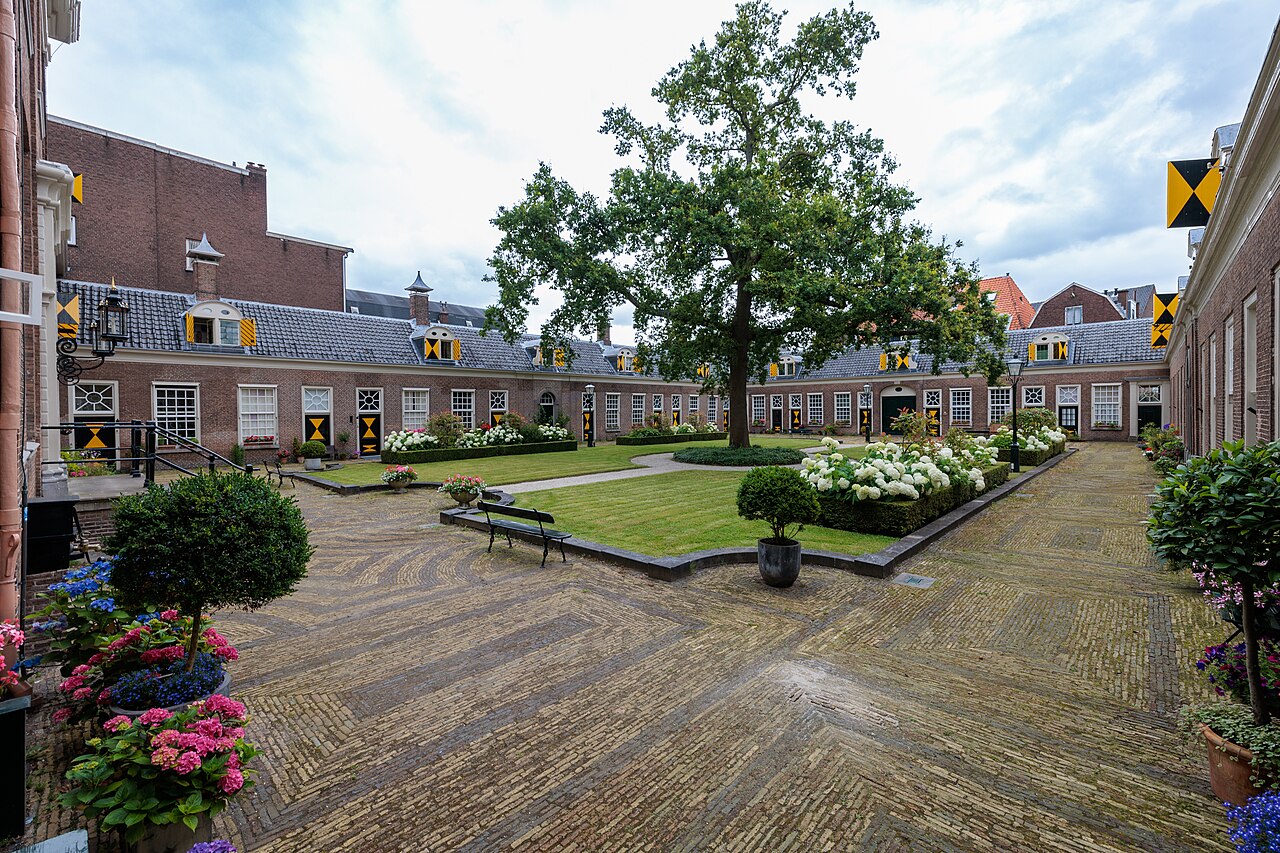 Source: Hofje van Staats Haarlem, 07-2024.jpg, CC BY 4.0 via Wikimedia Commons
Most rental guides for a Dutch city lean on a university or an industry to explain why housing is hard to find. Haarlem’s explanation is simpler and, in a way, more stubborn: it is next to Amsterdam, and Amsterdam ran out of room first. Understanding that dynamic, plus a handful of genuinely local details, tells you more about where to look than any single average rent figure will. If you would rather jump straight to the mechanics, the documents, registration steps, scam red flags and the legal rent-cap check all sit further down this guide; the context here is simply what makes those steps make sense.
The Amsterdam-overflow effect is the whole story
Haarlem is not a suburb in the sprawl sense; it is its own city with its own identity, but it functions as the default landing spot for people who decided Amsterdam had become unworkable without wanting to leave the region entirely. Households priced out of the capital arrive here and, because they are comparing against Amsterdam rents, treat Haarlem prices as reasonable, even generous. That comparison is exactly why locals who never left find themselves outbid on their own doorstep. Analysts covering the wider Randstad describe the “Haarlem agglomeration” as one of the areas where ordinary incomes can now afford only a small fraction of what actually sells or lets, right alongside Greater Amsterdam itself.
A historic centre built for looking, not for extra square metres
The Grote Markt, the Stadhuis and the Grote Kerk (also known as St. Bavokerk, the enormous late-Gothic church that dominates the square) are the postcard version of Haarlem, and they are genuinely worth the postcard. What that history means for renters is less romantic: the Binnenstad’s housing stock is old, protected and small by design, so square-metre prices near the centre carry a heritage premium on top of the Amsterdam-overflow premium. Charm is not free here, it is priced in.
Hofjes: twenty-one working courtyards hiding behind ordinary doors
Scattered through the older neighbourhoods are hofjes, enclosed almshouse courtyards founded from the 1400s onward by wealthy citizens as charitable housing for the elderly and widowed. Haarlem preserves around twenty-one public hofjes, more than any other Dutch city, tucked behind plain street doors that give no hint of the garden courtyard inside. Most, like the Hofje van Bakenes or the Hofje van Staats, still function as sheltered housing today rather than as museum pieces, which is a genuinely distinctive feature of the city’s residential fabric and a useful bit of context if a listing mentions living “in a hofje.”
Beach on one side, city on the other
Ten minutes by train gets you to Zandvoort aan Zee, and the leafier route through Bloemendaal aan Zee is only a little further. That is not a weekend novelty, it is a practical reason a lot of renters choose Haarlem over Amsterdam outright: you keep the Randstad job market and get a beach commute in the other direction. Trains run roughly every half hour, so it is a realistic after-work habit rather than a special occasion.
A church that brews beer, because why not
The Jopenkerk on the Gedempte Voldersgracht is a deconsecrated Jacobs church, empty and derelict since the 1970s, reopened in 2010 as a working brewery, bar and restaurant reviving recipes the Haarlem Guild of Brewers first registered in the 1400s. It is a good short-hand for how the city treats its old buildings generally: reused rather than preserved in amber, which is also roughly what happens to Haarlem’s older housing stock when a landlord converts it into rental units.
Schalkwijk and the Europaweg zone: the pressure valve that is still being built
The city’s actual room to grow is on the southeast side, in and around Schalkwijk, the postwar district that already holds a large share of Haarlem’s rental stock. The municipality’s Oostpoort masterplan, approved in May 2026, will eventually add more than 900 homes near Haarlem Spaarnwoude station, split roughly 40 percent social rent, 40 percent mid-range and 20 percent free-sector, and the wider Europaweg development zone is aimed at around 6,000 homes toward 2030, including a new Nieuw-Zuid transport hub. None of it changes your search this year. It does explain why Schalkwijk, not the centre, is where Haarlem’s rental supply will loosen first.
Rooms, Studios, Apartments and Houses in Haarlem
Most Haarlem renters land in one of four buckets: a room, a studio, an apartment or a house. Because there is no single dominant institution driving demand, the useful filter is less “who competes with me” and more “which part of the Amsterdam-adjacent budget curve am I on,” since that shapes both the price and how fast a decent listing disappears.
Rooms for Rent in Haarlem
Rooms in Haarlem mostly go to young professionals commuting into Amsterdam, to students who are enrolled at universities in Amsterdam or Leiden but prefer to base themselves here, and to renters who simply cannot stretch to a self-contained studio at Haarlem prices. Because Haarlem has no large campus of its own generating a captive room market, this stock is smaller and less student-dominated than in a university city, which cuts both ways: fewer purpose-built student rooms, but also less of the September feeding frenzy. Expect shared kitchens and bathrooms, and expect the cheaper end of the room market to sit disproportionately in Schalkwijk, with pricier rooms in shared houses closer to the centre or in Ter Kleef, proof that even a shared room is not immune to Haarlem’s location premium.
Always confirm you can register at the address before you commit. Unregistered rooms create a genuine paperwork mess for your BSN, bank account and any benefit or benefit-check you might later need, and Dutch law requires registration once you have been in the country more than four months.
Fresh rooms in Haarlem
Rooms matched to your location and budget
 Room
Room Room
Room Room
Room Room
Room Room
Room Room
Room Room
Room Room
RoomStudios for Rent in Haarlem
A self-contained studio, your own kitchen, bathroom and living space behind one door, is the workhorse rental for solo Amsterdam commuters and internationals who want independence without apartment-level rent. Furnished studios near the station or the Binnenstad move quickly and command a real premium over unfurnished stock further out toward Schalkwijk or Haarlem-Noord.
Huurtoeslag (rent benefit) may apply if the studio qualifies and you meet the income and asset tests. From 2026 the rules changed: the hard rent ceiling was scrapped, the benefit is now calculated on rent up to about €932.93, and the qualifying age dropped to 21, so always confirm the current figures on the official Belastingdienst rent benefit page. At Haarlem’s studio price levels, plenty of renters sit right on the edge of qualifying, so it is worth checking properly rather than assuming either way.
Fresh studios in Haarlem
Studios matched to your location and budget
 Studio
 Studio
 Studio
 Studio
 Studio
 Studio
 Studio
 Studio
Apartments for Rent in Haarlem
Apartments are where the Amsterdam-commuter market concentrates hardest, and where most people who want to rent an apartment in Haarlem end up searching first. That search is smaller than it looks on paper: of the roughly 77,500 homes registered in the municipality, only about 47 percent are rented at all, the rest owner-occupied, so the private rental apartment stock is competing for space against a city that is, on balance, a city of owners. A one-bedroom near the station or the Binnenstad draws professionals who work in the capital and simply refuse to live there anymore, and two-bedroom flats pull in couples, sharers and relocating employees from firms across the wider Randstad. Furnished units are common in the expat-facing stock; semi-furnished ones may include flooring and kitchen appliances but leave the rest to you.
Check whether the quoted rent is bare, inclusive or exclusive before you get attached to a number. Bare rent (kale huur) excludes utilities and service costs entirely, and in a city with plenty of older, pre-war buildings, service costs for shared maintenance can be a real line item rather than a rounding error.
Houses for Rent in Haarlem
Houses for rent are the scarcest category and sit mostly outside the historic core, concentrated in Haarlem-Noord, Schalkwijk and, once you widen the search slightly, Heemstede. They suit families and long-term renters, and they come with the highest rent, the highest utility bills and the strictest income checks in the city.
Fresh apartments & houses in Haarlem
Apartments and houses matched to your location and budget
Apartment Apartment
 ApartmentApartment
 Apartment
 ApartmentApartmentStudio
Best Areas in Haarlem for Renters
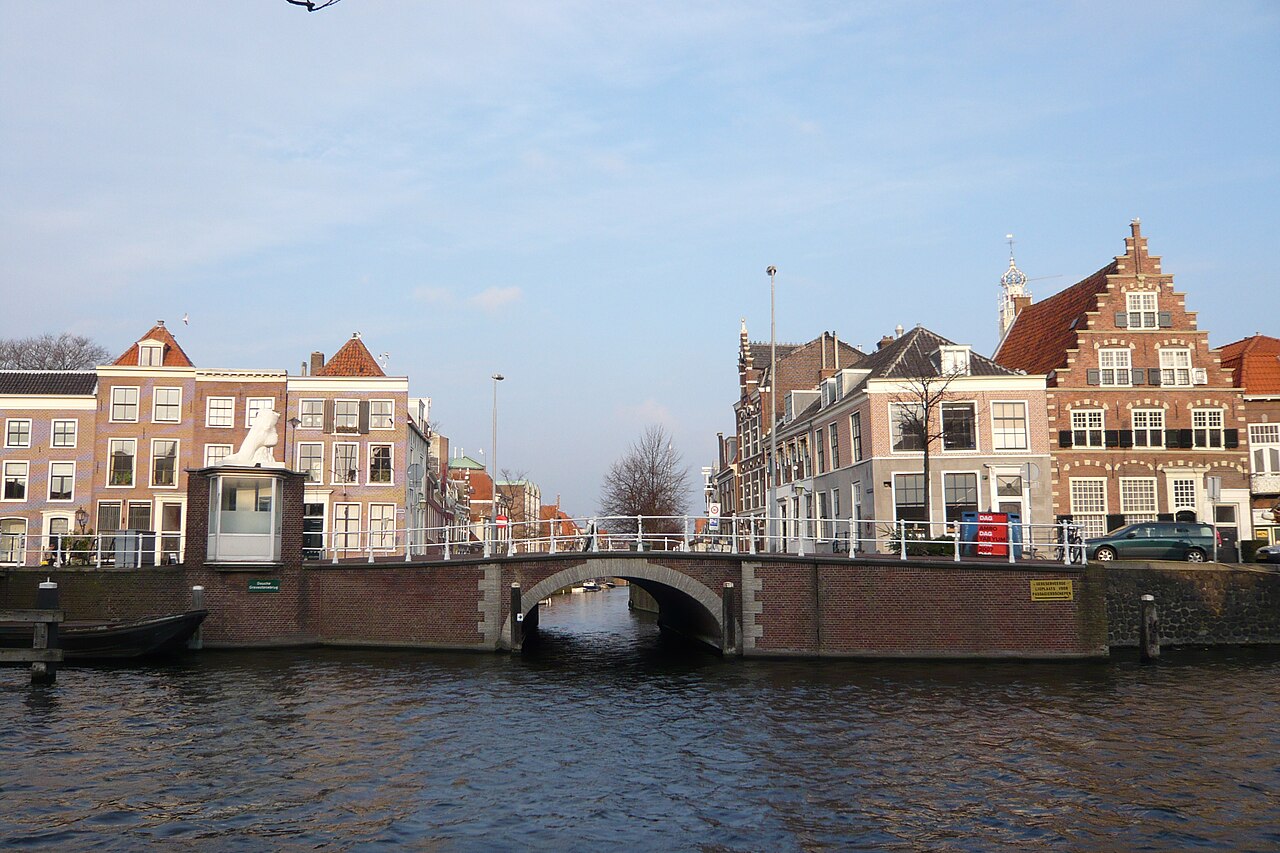 Source: Haarlem-Bakenessergracht vanaf Het Spaarne.jpg, CC BY-SA 3.0 via Wikimedia Commons
Haarlem is more varied than its compact size suggests. A furnished studio off the Grote Markt, a family house in Haarlem-Noord and a value room in Schalkwijk are three different searches with three different budgets and three different waiting times. Pick the neighbourhood that matches your priorities, not just the one you have already heard of.
Binnenstad / Centrum
Best for: renters who want the postcard view and can afford the postcard premium.
Typical rentals: converted period apartments and studios above shops, occasional canal-side flats.
Watch out for: the smallest floor areas at the highest prices per square metre, plus weekend footfall around the Grote Markt.
Everything that makes Haarlem worth visiting, the Grote Kerk, the Jopenkerk, the boutique shopping streets, is a short walk from your door. You pay for that daily.
Kleverpark
Best for: families and professionals who want green streets without leaving the city.
Typical rentals: late-19th and early-20th-century townhouses with high ceilings and ornate facades, some carved into apartments.
Watch out for: mid-range to premium rent, roughly €1,200 to €1,800, and stock that turns over slowly because people who land here tend to stay.
North of the station, Kleverpark is one of Haarlem’s consistently sought-after addresses, and it earns the reputation: leafy streets, real architecture, and a settled, family-heavy atmosphere. That family draw is practical as well as aesthetic, since the quiet residential streets put ordinary Dutch neighbourhood primaries like De Werkschuit within walking or short-cycling distance, so parents are not committing to a long school run on top of the rent, one of the concrete reasons this is a district families settle into rather than pass through.
Leidsebuurt and the Garenkokerskwartier
Best for: young professionals and renters who want a livelier, less polished feel than the centre.
Typical rentals: mixed older apartments and converted houses, a step down in price from the Binnenstad.
Watch out for: proximity to nightlife streets means more noise than the leafier districts.
West of the centre toward the dunes, this pairing of neighbourhoods has neighbourhood pubs, a younger crowd and a genuinely local character. The Garenkokerskwartier in particular consistently ranks among Haarlem’s safer areas, which matters if that is on your checklist.
Schalkwijk
Best for: renters chasing value and anyone willing to trade postcard charm for space and price.
Typical rentals: 1960s and 1970s apartment blocks across sub-districts like Europawijk, Boerhaavewijk, Meerwijk and Molenwijk, plus new mid-range and social rental building under the Oostpoort and Europaweg plans.
Watch out for: a district genuinely in transition, so quality and character vary block to block, and it is a longer ride from the historic centre.
This is the largest district in the city and, by a wide margin, where your euro stretches furthest, commonly quoted at up to 20 percent below the centre for comparable space. It is also where most of Haarlem’s actual new housing supply is being built, which makes it worth watching even if you do not sign here first.
Haarlem-Noord and Ter Kleef
Best for: commuters who want proximity to the station wrapped in a quieter, greener setting.
Typical rentals: apartments in characteristic pre-war buildings plus occasional newer builds, mid-range to premium at roughly €1,200 to €1,800.
Watch out for: a mix of building ages means insulation and energy labels vary a lot between otherwise similar-looking flats.
The Ter Kleefkwartier sits on the north side of the station, bordering the Haarlemmerhout, the oldest public park in the Netherlands and still in use since the Middle Ages. Quiet, classic and genuinely convenient for the train, which is exactly why commuters gravitate here.
Nearby Alternatives: Heemstede, Bloemendaal, Beverwijk and Beyond
If Haarlem itself will not cooperate, the surrounding towns are close enough that commuting from one of them barely counts as a compromise. Some cost more than Haarlem, some cost noticeably less, and the choice comes down to what you are optimising for.
- Heemstede - a five-minute train ride, leafy and family-oriented, generally at or above Haarlem price levels rather than below them.
- Bloemendaal - about three minutes by train, an affluent village near the dunes that tends to run pricier than Haarlem, not cheaper.
- Beverwijk and Velsen - further north along the coast, noticeably cheaper than Haarlem with their own direct rail links, a realistic option if budget matters more than address.
- Hoofddorp - part of Haarlemmermeer, well connected toward Schiphol and Amsterdam, with a housing market that runs a bit less pressured than central Haarlem.
- Zandvoort - about ten minutes by train, small and beach-facing, worth a look if you want the coast more than the canals.
Use NS for trains, local Connexxion buses around the wider region, and 9292 to check any door-to-door journey before you commit to an address. A five-minute train time on paper can still mean a genuinely awkward evening commute once you add the walk on both ends.
What You Need to Rent in Haarlem
Build your rental profile before you apply, not after. In a market this competitive, the applicant who shows up complete, payslips, guarantor, a short and specific introduction, wins the reply even when someone else applied a few minutes earlier.
Documents Landlords Usually Ask For
- Valid ID or passport
- Proof of income
- Employment contract or recent payslips
- Bank statements, sometimes
- Proof of enrollment, for students
- Guarantor details, if your income is low or foreign
- BSN, if already available
- Short personal introduction
- Preferred move-in date and household details
- Pet information, if relevant
Income, Deposit and Contract Basics
Many landlords want gross income around 3 to 4 times the monthly rent, though this shifts by agency and property. A €1,600 apartment can therefore call for roughly €4,800 to €6,400 gross monthly household income, a real number given Haarlem’s price level. Scale that up to a family-sized home and the bar climbs steeply: a €2,300 house points to something like €6,900 to €9,200 gross a month, which is why two-earner households dominate the free-sector family search here. Shared and room rentals will often accept a guarantor instead. Deposits are usually one to two months’ rent.
One factor that can quietly ease those figures for a relocating professional is the Dutch expat tax break, still known to almost everyone as the 30% ruling. Where an eligible skilled worker is recruited from abroad, an approved employer can pay part of the salary with no tax taken off it: that untaxed portion stays at 30 percent for 2026 and then settles to a flat 27 percent from 1 January 2027, and it only kicks in once taxable salary clears a floor of €48,013, or €36,497 for under-30s holding a qualifying master’s. The catch for a rental application is that a landlord measures your gross income, whereas the ruling works on take-home pay, so it will not push you over the gross multiple above. What it does is leave more in your account each month, so a rent that looks marginal against the gross figure can sit more comfortably in practice. Plenty of Amsterdam-based employers who feed Haarlem’s commuter market hire on it, but eligibility turns on your own contract, so confirm your position with a tax adviser or the official guidance rather than assuming.
The Government.nl rented housing pages cover the basics of Dutch rental rules, including rent, tenancy agreements, maintenance and service charges. For disputes, the Huurcommissie is the official Dutch rent tribunal. Before signing, check:
- Is the contract written?
- Is the rent bare, inclusive or exclusive?
- Are service costs clear?
- Can you register at the address?
- Is the deposit reasonable?
- Who is responsible for utilities?
- Are there agency or administration fees?
Registration in Haarlem
Move to Haarlem from abroad for more than four months and you must register with the municipality within five days of arrival. Gemeente Haarlem’s Verhuizen naar Nederland page explains that you need an online appointment at the publiekshal, a valid passport or ID (plus a residence permit if you are not Dutch or EU), and proof of address such as a rental contract. You will receive your BSN by letter within about a week of registering.
Approach a listing that forbids registration with real caution. Combined with pressure, vague landlord details, unusual payment methods or a refusal to let you view, that is a textbook warning sign, and it matters more in a market where the “too good to be true” listing is specifically priced to look reasonable next to Amsterdam.
Rental Scams: The Amsterdam-Comparison Trap
Haarlem’s scam pattern borrows its cover story from the city’s own reputation. A listing prices itself as a steal, but only next to Amsterdam, not next to anything actually comparable. The landlord cannot show you around because they are conveniently abroad, they want money transferred before any contract or key handover, and then communication goes quiet. Never pay by gift card or crypto, only transfer to a Dutch bank account belonging to the verified owner or organisation, and if a “for rent” property also shows up “for sale” on Funda, walk away.
New to the Netherlands? Start Here (Professionals, Students & Internationals)
Haarlem is thoroughly international, full of people who moved for a job in Amsterdam and decided to live somewhere calmer. It is honest to say it is not a university town in its own right, and that matters if you are moving for a Dutch degree: Amsterdam and Leiden hold the campuses and the purpose-built student housing that Haarlem does not, so if study is the reason for your move, weigh living in one of those cities against renting in Haarlem and commuting the short train hop in. Plenty of students still choose Haarlem anyway for the quieter, sometimes cheaper trade-off, and if that is you, the room-hunt advice below applies just as it does to a working newcomer. Either way, the first thing to grasp is the chicken-and-egg problem that catches almost everyone new to the Netherlands.
The chicken-and-egg problem
To register with the municipality and get a BSN (your citizen service number), you usually need a registered address. To open a full Dutch bank account, life is easier with a BSN. And many landlords want to see a Dutch income, a Dutch guarantor or both before handing over a contract. Every requirement leans on one of the others. The circularity is real, and getting through it means tolerating some steps happening out of order. If your move is a transfer from an Amsterdam office rather than a job hunt from scratch, ask HR before you ask a landlord: relocation teams at capital-based employers deal with this exact loop often enough that they usually have a documented workaround, even if nobody volunteers it upfront.
What you can do from abroad right now:
- Line up your documents in English or Dutch: passport, employment contract, and recent proof of income or funds.
- Ask specifically about registration. Only take a room where you can register at the address, because registration unlocks the BSN, and you are legally required to register once you are here for more than four months.
- Sort out a guarantor plan, and know that the obvious routes are not the only ones. A paid guarantor service or several months of rent upfront both work, but both need cash you may not have yet. The route that costs nothing is a parent or family member abroad standing as guarantor, and whether a landlord accepts it comes down to presentation: hand over their income and bank paperwork already translated into clean Dutch or English, because a landlord squinting at documents they cannot read, or picturing a debt they would have to chase across a border, tends to move on to the next applicant. Ask each landlord which option they will actually take before you commit.
- Look at short-stay and corporate lets. Furnished mid-term housing is common around a city with this much relocation traffic, and it makes a realistic first landing while you find something longer.
- Check the community channels. Local expat and Haarlem-area Facebook and WhatsApp groups regularly carry rooms, sublets and flatmate searches. These routes are real and useful, not a fallback for people who could not find anything better.
Paying a deposit safely, and getting it back
Pay a deposit only once you have a written contract, and only to the verified bank account of the actual owner or a recognised organisation. Never send a deposit by gift card, crypto or to a private account for a home you have not seen. A deposit is normally one to two months’ rent, it should be written into the contract, and it must be returned after you leave once any genuine damage is settled. If a landlord refuses to return a reasonable deposit, the Huurcommissie can rule on deposit and rent disputes.
Arriving without housing
It happens, particularly if your job offer moved faster than your housing search. A short-stay apartment, serviced flat or a room in nearby Heemstede or Hoofddorp buys you time to view Haarlem properties in person, which is far safer than committing to a room sight unseen from another country. Treat it as a deliberate landing pad, not a defeat, and keep your saved searches and alerts running the entire time.
A simple timeline:
- Now: gather documents, arrange a guarantor or upfront-payment plan, and start saved searches and alerts across Haarlem and the surrounding towns.
- Ahead of arrival: secure a short-stay landing pad if nothing permanent is confirmed, and have viewings lined up for week one.
- First 5 days: view in person, sign only a written contract, and pay the deposit only to a verified account.
- First month: register with Gemeente Haarlem, collect your BSN, open a Dutch bank account, and run the Huurcommissie rent check on your new address.
Budget for the upfront hit. A typical move-in on a €950 studio means roughly €950 first month’s rent plus a deposit of one to two months (€950 to €1,900), so plan for somewhere around €1,900 to €2,850 before you even think about furniture, and more if a landlord asks for several months upfront in place of a guarantor.
Renting as a Family / Relocating with Kids
Haarlem is a genuinely popular landing spot for families leaving Amsterdam for more space, and the market reflects it: more three-bedroom stock than a typical Dutch city its size, but still nowhere near enough to make the search easy.
Schools: local options exist, but book early
International School Haarlem, open since 2017, is a genuine local option covering ages 4 to 18 across two primary campuses plus secondary provision, running the International Primary Curriculum and IB Middle Years, Career-related and Diploma Programmes. Winford Bilingual School Haarlem offers fully immersive Dutch-English primary education for ages 4 to 12. Families who do not find a place at either commonly look toward Optimist International School in Hoofddorp (Haarlemmermeer), a short hop away and geared toward Schiphol-area relocations. Places at all of these fill up, so register as early in your move as you possibly can.
The international schools are far from the only route, though, and for many families they are not the obvious one. The bulk of Haarlem’s children attend ordinary Dutch-curriculum neighbourhood primaries, both openbaar (municipal) and bijzonder (with a religious or pedagogical character), which are state-funded, teach in Dutch and charge only a modest voluntary parental contribution rather than real tuition. Kleverpark alone has settled neighbourhood schools such as De Werkschuit, a small Dutch-language primary in the heart of the district, and a child who arrives without any Dutch normally starts in a dedicated immersion programme (nieuwkomersonderwijs) that brings the language up to speed before transferring across into a regular class. It is a slower cultural landing than an English-language stream, but for a family watching the budget it is a genuine and widely chosen path rather than a fallback.
Childcare and BSO
Daycare (kinderopvang) and after-school care (buitenschoolse opvang, or BSO) are widely used but heavily subscribed in a city this popular with families. Register well ahead of your move, because popular locations fill months in advance, and check where you land on the national childcare allowance (kinderopvangtoeslag), because it is worth doing the sum rather than assuming. The refund works on a sliding scale: the top tier of 96 percent of a capped hourly rate, roughly €11.23 for daycare in 2026, goes to households earning up to about €56,000 combined, and your share tapers down from there as income rises. That matters precisely because a two-earner household clearing the €6,900-plus gross a family house tends to demand sits well above that threshold, so expect a partial subsidy rather than the headline 96 percent, and note that anything a nursery charges above the €11.23 cap is on you regardless of income.
What a family home actually costs per month
Rent is the down payment on the real monthly figure, not the total. For a €2,300 family house, add €250 to €350 a month for gas, electricity and water, weighted heavily by the energy label since Haarlem’s historic housing stock is not known for insulation. Municipal and water-board taxes add a few hundred euros a year, and internet and service costs stack on top. Altogether, that €2,300 house lands around €2,650 to €2,800 a month before childcare or schooling.
Contracts: indefinite is now the default
Good news for families who want to put down roots. Since 1 July 2024, under the Fixed-Term Tenancy Act (Wet vaste huurcontracten), an indefinite contract (onbepaalde tijd) is again the default for most new self-contained tenancies, and temporary contracts are only allowed in a limited set of cases such as student housing, a landlord’s temporary absence or job-tied housing. An indefinite contract gives strong, lasting security: the landlord can only end it on specific legal grounds. If you are offered a temporary self-contained contract, ask why, because in most situations it should be indefinite.
Where the family stock is, and bridging the gap
Three-bedroom-plus houses with gardens are concentrated in Haarlem-Noord and, in growing numbers, in the redeveloping parts of Schalkwijk, with Heemstede as the obvious step-out option once you widen the search. Free-sector family houses inside Haarlem proper are genuinely scarce and get taken quickly, so if you are relocating on a fixed date, a furnished short-stay or temporary apartment as a bridge is often the sane way to arrive, view properly and sign the right long-term lease rather than the first one available.
How to Find Rentals in Haarlem Faster
A manual search in Haarlem sprawls fast, and it sprawls in an unusual direction: instead of watching one or two student-housing feeds, you end up watching Pararius, Kamernet and HousingAnywhere for Haarlem itself, then again for Heemstede, Bloemendaal, Beverwijk and Hoofddorp, on the theory that whichever one turns something up first wins. Add local expat Facebook and WhatsApp groups, which genuinely do carry real listings from landlords and outgoing tenants. The problem is not any single platform. It is that no human refreshes six sources across five towns fast enough to beat everyone else running the same loop.
Why Manual Search Breaks Down
- You check too many platforms by hand
- You see listings too late
- You rewrite the same message over and over
- You miss listings while working, studying or sleeping
- You lose track of where you applied
- Amsterdam-adjacent demand never really has an off-season
- You waste time on listings outside your budget
Haarlem rewards speed and preparation, because the competition is not a single autumn intake, it is a permanent, rolling stream of people leaving Amsterdam. When a good listing appears, replies land within the hour. The competition here forms within minutes of a listing going live, not days, and it never comes back around for latecomers.
Faster Search with AnyHouse
AnyHouse helps you search faster by combining broader coverage, alerts and application workflow in one place. With AnyHouse you can:
- Scan 400+ rental platforms
- Set your Haarlem preferences once
- Get fast alerts when matching homes appear
- Track listings and applications
- Use AI-assisted applications
- Auto-apply to suitable homes based on your criteria
- Search rooms, studios, apartments and houses from one flow
No tool can guarantee housing, and be sceptical of anything that says it can. What AnyHouse actually gives you is speed, wider coverage and a single place to stay organised, so you see the right listing in its first minutes, when applying still means something.
Fresh rentals in Haarlem
Listings matched to your location and budget
ApartmentApartmentApartmentHouseYour next Haarlem rental might appear today.
AnyHouse helps you see it faster.
Get instant rental alerts in Haarlem
“Cheaper Than Amsterdam” Is Not the Same as Legal: WWS Points
Haarlem’s whole rental identity rests on a comparison: cheaper than Amsterdam, so it must be fine. That comparison is exactly what lets an illegal rent hide in plain sight. A price that looks like relief next to a capital-city listing can still sit well above what Dutch law actually permits for that specific home, and plenty of Haarlem landlords are counting on renters not checking the difference.
The cap is computed via the woningwaarderingsstelsel (WWS), a points tally of floor area, facilities, energy label and more. The Affordable Rent Act (Wet betaalbare huur), in force since July 2024, widened the regulated band, so a meaningful share of ordinary Haarlem apartments, not just rooms, now sit under a legal maximum rent whether the listing mentions it or not.
Before you sign, feed the address into the official Huurcommissie Huurprijscheck to learn the maximum lawful rent. If you are asked for more, you can still take the home and then ask the Huurcommissie, the rent tribunal, to cut the rent, usually within the first months of the contract. In a market built on the psychology of “compared to Amsterdam this is a deal,” that check is worth five minutes of your evening.
Haarlem Rental FAQ
How much does it cost to rent in Haarlem?
Rent depends on property type, area, furnishing and contract style. As a guide: rooms average roughly €750-820 and studios around €900-950, while a typical one-bedroom apartment sits near €1,600 and the wider apartment band runs €1,300 to €2,200 once larger and furnished free-sector flats are included, with houses higher again. Use live AnyHouse data for the most current market prices, since public sources track different rental stock and show different averages.
Is Haarlem cheaper than Amsterdam?
Generally yes, by something in the order of 10 to 20 percent depending on the source and property type, but it is still one of the most expensive rental markets outside the Randstad core. Treat “cheaper than Amsterdam” as a comparison, not a guarantee that a given rent is reasonable or legal.
Is it hard to find housing in Haarlem?
Yes. Haarlem absorbs a steady stream of renters priced out of Amsterdam on top of its own resident demand, so anything well-priced and well-located lets almost immediately. Speed and preparation matter more here than in most Dutch cities, and there is no quiet season to rely on.
What income do I need to rent in Haarlem?
Many landlords expect gross income around 3 to 4 times the monthly rent, although requirements vary. A €1,600 rental may require roughly €4,800 to €6,400 gross monthly household income, and a €2,300 family house closer to €6,900 to €9,200. Shared and room rentals may accept a guarantor.
Is there a tax break for professionals moving to Haarlem?
There can be. A skilled worker recruited from abroad may qualify for the Dutch expat scheme, still universally called the 30% ruling, under which an approved employer pays part of the salary with no tax on it. That share is 30 percent for 2026 and becomes a flat 27 percent from 1 January 2027, and it only applies above a taxable-salary floor of €48,013, or €36,497 for under-30s with a qualifying master’s. Because it works on take-home pay rather than gross, it will not lift you over the gross-income multiple a landlord applies, but it does leave more in your pocket each month. Many of Haarlem’s residents commute to Amsterdam employers who hire on it, so check your own position with a tax adviser or the official guidance before relying on it.
What documents do I need to rent in Haarlem?
Usually ID, proof of income, an employment contract or payslips, and sometimes bank statements. Internationals may need residence documentation, employer details and confirmation that registration at the address is possible.
What are the best areas for value in Haarlem?
Schalkwijk is the clear value pick, commonly quoted at up to 20 percent below the centre, with new mid-range and social housing arriving through the Oostpoort and Europaweg developments. Leidsebuurt and the Garenkokerskwartier are the next step up in price with a livelier, younger feel.
What are the best areas for families and professionals?
Kleverpark and Haarlem-Noord (including Ter Kleef) suit families and commuters who want green, settled streets close to the station. Professionals drawn to walkability often look at the Binnenstad despite the premium, while families needing more space and a garden frequently widen the search to Heemstede.
Can I live outside Haarlem and commute?
Easily, and many residents effectively already do the reverse, commuting into Amsterdam from Haarlem. Heemstede and Bloemendaal are minutes away, Beverwijk and Velsen offer a real price break with their own train links, and Hoofddorp connects well toward Schiphol. Widening the search often finds a home faster than waiting for the perfect Haarlem listing.
What is the fastest way to find rentals in Haarlem?
Use alerts, prepare your documents, respond within minutes and track every application. AnyHouse scans 400+ platforms and sends fast alerts when matching homes appear, so you are not refreshing rental websites all day while the good listings go to someone quicker.
Start Your Haarlem Rental Search
Now you have the real map: Haarlem is Amsterdam’s pressure valve, historic and genuinely charming, cheaper than the capital but still expensive by national standards, with Schalkwijk as the value district and the coming Oostpoort and Europaweg projects as the long-term release, scams that lean on the Amsterdam comparison, and speed as a real advantage.
Knowing how the market works will not secure you a home; reacting to a listing in its first hour will. In Haarlem that hour is short. AnyHouse helps you stop refreshing rental websites by hand: set your preferences, get alerts, track applications and search across rooms, studios, apartments and houses from one place.
Fresh rentals in Haarlem
Listings matched to your location and budget
ApartmentApartmentApartmentHouseYour next Haarlem rental might appear today.
AnyHouse helps you see it faster.
Get instant rental alerts in Haarlem
Free to install · iOS & Android · 400+ platforms · Fast alerts · AI-powered applications
Rental Guides for Other Dutch Cities
House-hunting beyond Haarlem? AnyHouse has in-depth rental guides for cities across the Netherlands: