
Nijmegen: Apartments, Rooms, Studios and Houses for Rent
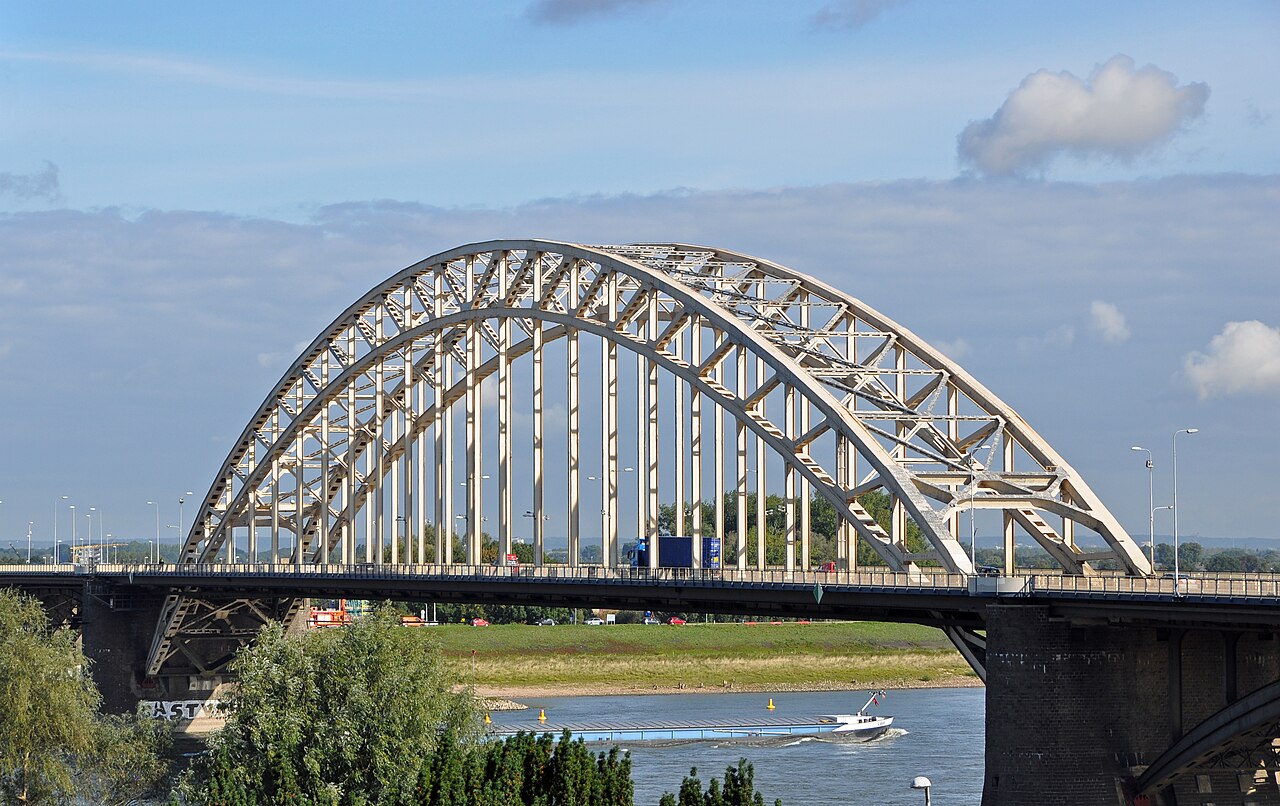
Source: Nijmegen Waalbrug R01.jpg, CC BY-SA 3.0 NL via Wikimedia Commons
Apartments, Rooms, Studios and Houses for Rent in Nijmegen
Nijmegen sells itself as the oldest city in the country, and most of what makes renting here strange traces back to that boast. Two thousand years of continuous settlement means a housing stock that ranges from Roman-adjacent brick to 1960s high-rise, a river that split the city’s growth into two very different halves, and two large student institutions dropping fresh arrivals into the same streets every autumn. None of that shows up in a listing photo. All of it shows up in your first month here.
The city is generally regarded as, and markets itself hard as, the oldest city in the Netherlands: a Roman settlement called Ulpia Noviomagus Batavorum stood here, and Emperor Trajan is thought to have granted it city and market rights sometime between 98 and 104 AD, roughly two thousand years ago. Maastricht and Voorburg make similar claims, so treat “oldest” as a point of civic pride rather than a settled historical fact. Radboud University enrols around 23,383 students as of the 2025 to 2026 academic year, with roughly one in ten coming from abroad, and HAN University of Applied Sciences (Hogeschool van Arnhem en Nijmegen, which as the name suggests splits its campuses across both cities) adds tens of thousands more, a figure last reported at around 34,000 in its 2023 annual report. Add Radboudumc, the academic hospital that alone employs close to 13,000 people, and Nijmegen’s roughly 190,000 residents share their rental market with an enormous, largely young population that is not going anywhere.
AnyHouse helps you search faster. We scan 400+ rental platforms, send fast alerts when matching homes appear, help you track listings, and can help you apply to suitable rentals based on your preferences.
Nijmegen rentals: the short version
- What things cost: a room averages around €600/month, a studio around €780, and a one-bedroom apartment around €1,300. Ranges swing wide, and room prices have been climbing fast.
- Red flag one: a landlord who cannot arrange a viewing because they are supposedly abroad and wants money transferred before any contract or key handover.
- Red flag two: a listing priced well under everything comparable nearby, especially one that also turns up “for sale” on Funda or asks for payment by gift card or crypto.
- Do this first: if you are a first-year international heading to Radboud or HAN, check the SSH& reserved-room booking window the day you are admitted, and start a private-market saved search in parallel.
- Before you sign: run the address through the Huurcommissie rent check, because a striking number of Nijmegen’s older flats are legally capped below the asking price (details further down).
Fresh rentals in Nijmegen
Listings matched to your location and budget
 Apartment
 Apartment
 Apartment
 Apartment
Your next Nijmegen rental might appear today.
AnyHouse helps you see it faster.
Get instant rental alerts in Nijmegen
Current Nijmegen Rental Market
Public rent figures for Nijmegen disagree with each other more than most cities, and that is worth understanding rather than shrugging off. Pararius’s Q4 2025 Huurmonitor puts the city’s average free-sector rent at roughly €16.50 per square metre, while another indexing service quoted a noticeably higher blended figure for early 2025. Neither is wrong. They are sampling different slices of stock, furnished mid-term lets, live private listings, student rooms, agency inventory, and none of them are measuring the same market. Kamernet’s own reporting is more consistent on rooms specifically: Nijmegen room rents were already around €599 in the first quarter of 2025 and had climbed toward €635 by the second quarter, a jump described by Kamernet itself as one of the steepest in the country that year.
So treat any single “Nijmegen average” with suspicion and work in ranges instead. A room in Bottendaal, a studio in Nijmegen-Oost and a family house in Lent are three separate markets with three separate timelines, and lumping them together tells you almost nothing you can act on.
| Property type | Average rent | Typical range | Best for |
|---|---|---|---|
| Room | €600/month | €450-800/month | Students / budget renters |
| Studio | €780/month | €650-1,150/month | Solo renters / internationals |
| Apartment | €1,300/month | €1,000-1,750/month | Couples / professionals |
| House | €1,850/month | €1,500-2,800/month | Families |
These are market ranges gathered from public rental sources. For the most current figures, use the live AnyHouse Nijmegen data on this page, which reflects what is actually available today rather than a blended historical average.
Nijmegen still undercuts Amsterdam and Utrecht comfortably, which is precisely why demand never really cools. It also sits a short hop from Arnhem on one of the busier regional rail corridors in the east of the country, so nearby towns genuinely compete for the same renters you do. Registration, contract quality and commute time end up mattering just as much as the headline rent.
What Makes Nijmegen Different: Two Thousand Years on the Waal
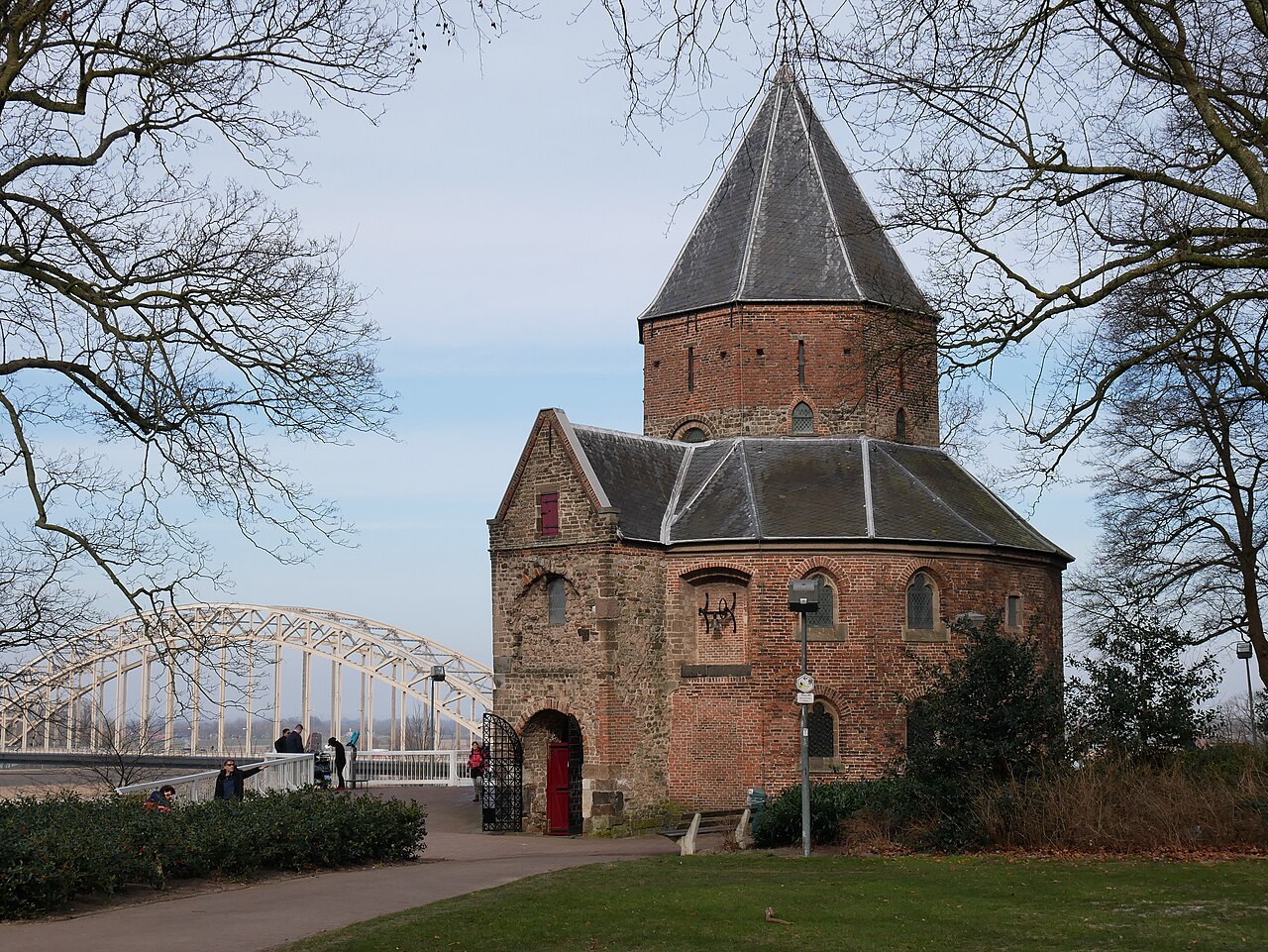
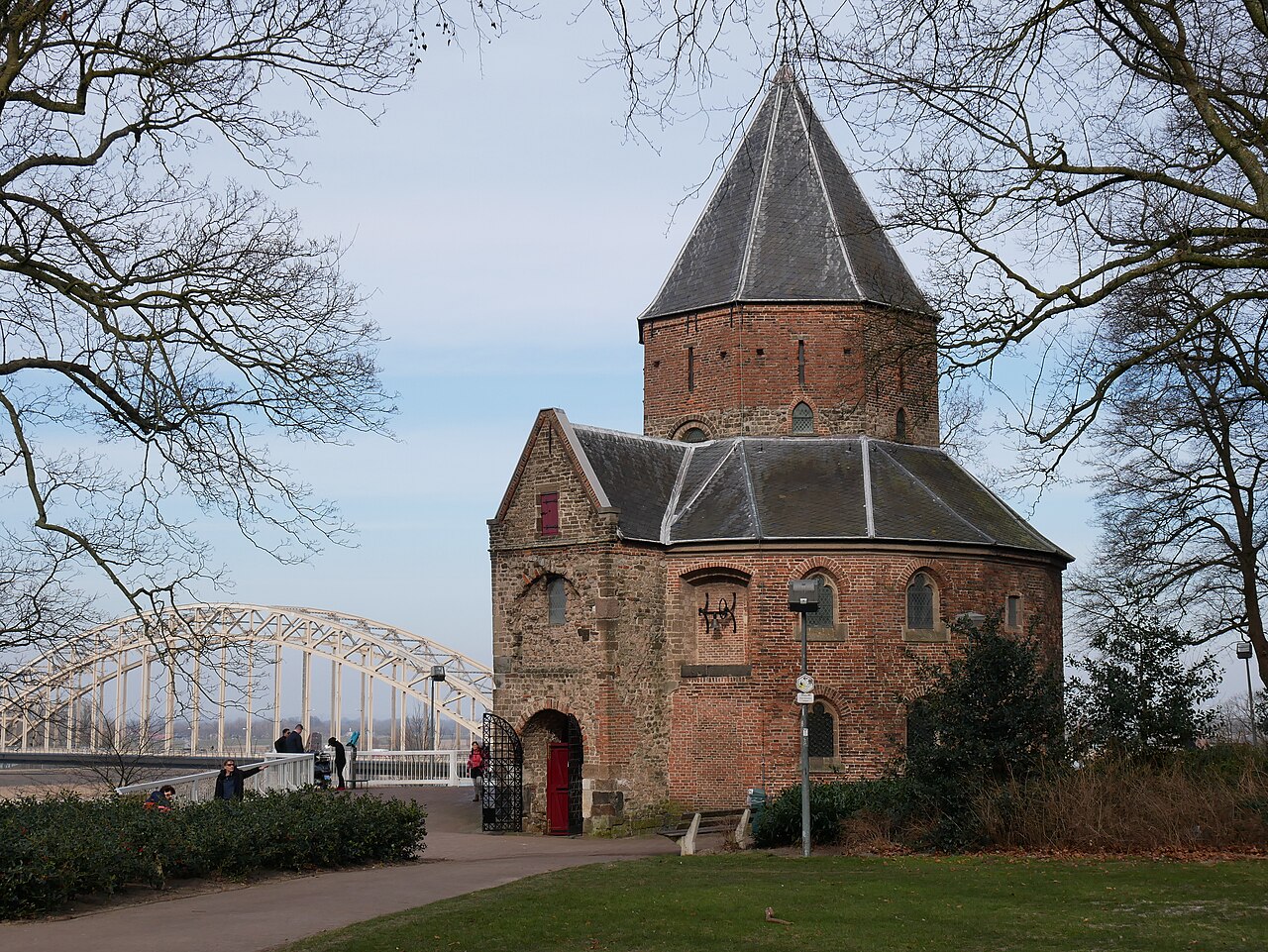
Source: 2018-03-04 Nijmegen Sint-Nicolaaskapel Waalbrug.jpg, CC BY-SA 4.0 via Wikimedia Commons
Most rental guides announce that a market is tight and move on. Nijmegen rewards a closer look, because the housing stock has been shaped by history in ways that still show up in what you are offered and what it costs. If you would rather act than read the backstory first, none of what follows is homework: the paperwork, how registration works, the warning signs of a scam, a section on renting with children and the check for whether an asking rent is even legal all wait further down, so jump ahead and circle back once you have the keys.
The Heyendaal campus and Radboudumc anchor the local economy
South-east of the centre, the Heyendaal campus bundles Radboud University, HAN’s health faculties and Radboudumc into one sprawling cluster of lecture halls, labs and hospital wings. Radboudumc alone employs close to 13,000 people, which makes it one of the largest employers in the entire region, not just a university hospital tacked onto a campus. The practical effect is that renters in the surrounding neighbourhoods are never purely students. Nurses, researchers, PhD candidates and hospital administrators all compete for the same one-bedroom flats near Heyendaal, so do not assume every rival applicant is twenty-one and cramming for exams.
Ulpia Noviomagus: the Roman roots you can still walk through
The Valkhof, a modest hilltop park above the Waal, is where the Roman camp and later a royal palace once stood, and it is still the single best place in the city to feel the two-thousand-year claim rather than just read it. The Sint-Nicolaaskapel, a small Romanesque chapel, has watched the river from that hill since roughly the twelfth century, and the nearby Museum Het Valkhof houses the archaeological finds that back up the Roman story. None of this raises your rent directly, but it does explain why so much of the centre is designated as a protected cityscape, which quietly affects what landlords are legally allowed to charge (more on that later).
Waalfront and Waalsprong: a second Nijmegen taking shape across the river
Two large development programmes are reshaping where people actually live. Waalfront, on the city side of the river near the old harbour, is planned for roughly 2,200 homes in total; Koningsdaal and Handelskade are already finished and occupied, and a newer phase called Iris is adding around 500 more homes and apartments. Across the water, the Waalsprong programme covering Nijmegen-Noord and Lent is far larger again, targeting roughly 12,000 homes in total, with more than half already realised. If Nijmegen’s centre feels sealed off to newcomers, this is where the actual supply growth is happening, just on the other side of the bridge.
The bombardment of 22 February 1944 and the modernist centre it left behind
On 22 February 1944, Allied bombers aiming for targets in Germany diverted onto Nijmegen after poor weather, and the bombs meant for somewhere else fell on the historic centre instead. Close to 800 people were killed and large parts of the old core were destroyed. The rebuilding that followed took roughly two decades and deliberately did not try to recreate the medieval streets that were lost; squares like the Grote Markt and Plein 1944 were rebuilt in the modern architectural style of their era. The result is a city centre that mixes genuinely old surviving fragments with mid-century reconstruction, which is worth knowing before you assume every “characterful old building” for rent nearby is centuries old.
The Vierdaagse turns the city inside out every July
The Internationale Vierdaagse Afstandsmarsen Nijmegen, held every year since 1909 and marketed by its own organisers as the world’s largest multi-day walking event, brings well over 45,000 walkers to the city for four days of marching, with the accompanying Vierdaagsefeesten turning the whole centre into a week-long street festival. The 2026 edition runs Tuesday 21 to Friday 24 July. It is a wonderful week to live in Nijmegen and a genuinely difficult one to find a short-term sublet or a hotel room in, so if your move-in date lands anywhere near it, book earlier than you think you need to.
SSH& and the room shortfall behind the numbers
SSH& (rebranded from the older SSHN) is the main dedicated student housing provider for Nijmegen and Arnhem, and it manages more than 4,000 rooms in Nijmegen alone. A 2025 national housing monitor still put the local student housing shortfall at around 2,500 units. SSH& is building its way toward that gap rather than away from it: roughly 200 new rooms are planned at Groenewoudseweg, with construction starting at the end of 2025 and students expected to move in around 2027, part of a wider ambition to add somewhere between 1,000 and 1,600 units by the early 2030s in partnership with the municipality. None of that helps you this September, but it does mean the shortage is a known, tracked problem rather than a permanent fact of life.
Rooms, Studios, Apartments and Houses in Nijmegen
Most Nijmegen renters land in one of four buckets: a room, a studio, an apartment or a house. Which one you can realistically get, and how fast, depends far more on timing and budget than on preference, so it helps to know how each market actually behaves.
Rooms for Rent in Nijmegen
Rooms for rent in Nijmegen remain the entry point for students, exchange students and anyone watching their budget, usually with shared facilities: a kitchen, a bathroom, sometimes a living room. Demand spikes hardest around the joint intake of Radboud University and HAN, when both institutions empty their new cohorts into the same streets within a fortnight of each other before September.
Student housing in Nijmegen clusters close to the Heyendaal campus and in Bottendaal, a lively, densely packed neighbourhood a short cycle from the centre where students, young professionals and long-time residents share the same streets. Always confirm you can register at the address before you commit. Skipping registration can snarl your BSN, bank account, work and study paperwork, and if your stay will run longer than four months you are legally a resident and must register as one, within five days of arriving (the rule is spelled out in full further down).
Fresh rooms in Nijmegen
Rooms matched to your location and budget
 Room
Room Room
Room Room
Room Room
Room Room
Room Room
Room Room
Room Room
RoomStudios for Rent in Nijmegen
A studio in Nijmegen is normally self-contained: your own kitchen, bathroom and living space behind one door. Studios suit solo renters, PhD candidates, hospital staff on rotation and internationals who want their whole life behind a lock that only they control. That is a popular wish, so self-contained studios under roughly €800 tend to disappear within days, particularly near Heyendaal and around the station.
Furnished studios cost more but spare you the move-in logistics of buying a bed and a fridge. Unfurnished ones can look cheaper on paper and then quietly demand flooring, curtains and appliances before they are livable. Huurtoeslag (rent benefit) may apply if the studio qualifies and you meet the income and asset tests. The rules shifted again for 2026: the hard rent ceiling has been scrapped, the benefit is now calculated on rent up to about €932.93 a month, and the qualifying age for the standard rate dropped to 21, so always confirm the current numbers on the official Belastingdienst huurtoeslag page.
Fresh studios in Nijmegen
Studios matched to your location and budget

Apartments for Rent in Nijmegen
Apartments for rent in Nijmegen draw a broader crowd than the room market ever does: couples, professionals and small families all land in the same search, and Radboudumc, HAN staff and the wider Heyendaal cluster keep that demand warm year-round rather than only in autumn. A one-bedroom near the centre draws plenty of interest on its own; two-bedrooms pull in couples, sharers and relocating hospital or university staff from across the region.
Read the price line carefully before you get attached to a listing. Bare rent (kale huur) excludes utilities and service costs entirely. Inclusive rent may cover some of them, rarely all of them, so the all-in monthly figure can land noticeably above the headline number in the ad.
Houses for Rent in Nijmegen
Houses for rent in Nijmegen are noticeably scarcer than apartments, clustering mostly across the river in Lent and the wider Waalsprong, with the rest scattered through Dukenburg and villages just outside the city like Wijchen. They suit families and long-term renters, and they generally come with higher rent, higher energy bills and stricter income checks. Because so much of the family-sized stock sits across the Waal, there is a dedicated section on renting with children, schools and what a house really costs each month further down.
Fresh apartments & houses in Nijmegen
Apartments and houses matched to your location and budget
ApartmentApartmentApartment ApartmentApartment
 Apartment
 Apartment
 Apartment
Best Areas in Nijmegen for Renters
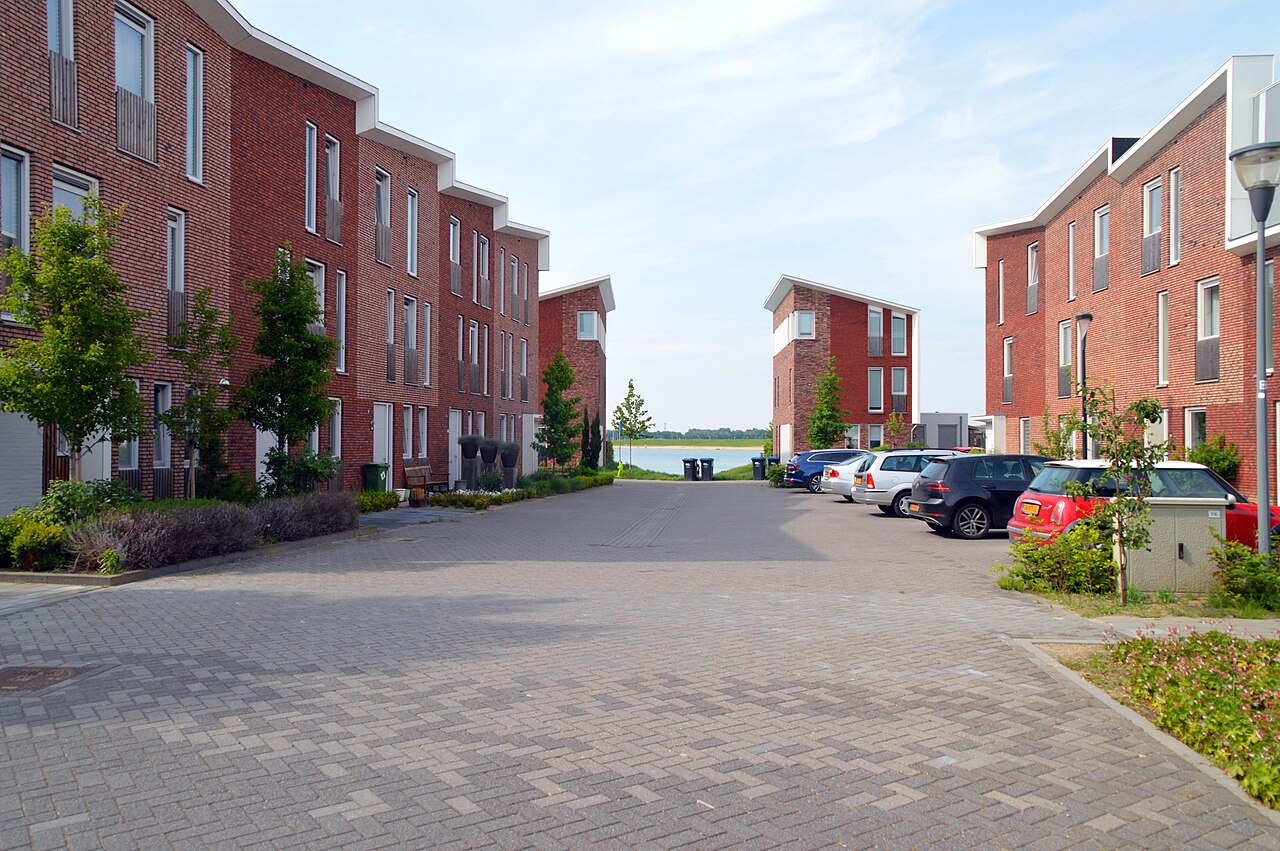 Source: Lent Oasisstraat Nijmegen.jpg, CC BY-SA 4.0 via Wikimedia Commons
Nijmegen is not one market wearing different names. A student room in Bottendaal, a hospital-adjacent studio near Heyendaal and a new-build family house in Lent are three different searches with three different budgets, and the river genuinely splits the city into two distinct rental experiences.
The cards below sketch character and price, but none of them can vouch for a specific street. For that, the national Leefbaarometer, run by the Ministry of the Interior, scores livability and safety down to individual blocks from public data, and recorded-crime figures for Nijmegen sit close to the Dutch average overall. Read either alongside a listing rather than taking the photos on trust, especially in the larger post-war districts where one street can feel very different from the next.
Centrum and Benedenstad
Best for: renters who want everything within walking distance and can pay the premium for it.
Typical rentals: apartments and studios above shops, converted townhouses in the medieval Benedenstad.
Watch out for: some of the highest rents in the city, small floor areas, and a crowded, festive atmosphere every July during the Vierdaagse.
The Benedenstad is the oldest surviving pocket of the city, a protected cityscape of narrow streets running down to the Waal, while the wider Centrum mixes shopping streets with genuine Roman-era history at the Valkhof. Glorious to live in, rarely cheap.
Bottendaal
Best for: students and young renters who want lively streets close to the centre.
Typical rentals: rooms, older apartments and shared houses in dense terraced streets.
Watch out for: one of the most competitive room markets in the city, with good listings gone within the hour around intake.
Just east of the centre and a short walk from the station, Bottendaal has long been the neighbourhood students gravitate toward first. It is a genuine mix rather than a bubble, students, young professionals and long-settled families share the same blocks, but the room turnover is relentless.
Oost and Hunnerberg
Best for: professionals and couples who want a leafy, settled feel without leaving the city.
Typical rentals: larger 19th-century apartments and townhouses, some subdivided into flats.
Watch out for: quieter streets toward Hunnerberg itself, but smaller and pricier apartments the closer you get to the centre.
Built up mostly in the 1800s as the city expanded beyond its old walls, Oost has a grown-in, spacious character that plenty of renters prefer to a shinier new-build. Hunnerberg, its inner edge, sits close enough to the Valkhof and the station to command a premium.
Dukenburg
Best for: families and value-conscious renters who want space and green surroundings.
Typical rentals: 1960s and 1970s low, mid and high-rise apartments, plus some family houses.
Watch out for: further from the centre and campus, so factor in the bus or bike ride.
Built up through the 1960s and 1970s, Dukenburg holds a large share of the city’s green space and stays noticeably more affordable than anywhere closer to the centre. It is the district regulars point to when someone asks where the actual value is. On safety, it is calmer than its high-rise reputation suggests, and the honest caveat is social rather than criminal: residents rate neighbourhood cohesion lower than the city norm, and a few sub-areas such as Zwanenveld and Lankforst are flagged on the Leefbaarometer for weaker livability, so this is exactly the kind of district where checking the specific street pays off.
West: Waterkwartier, Wolfskuil and Biezen
Best for: budget-minded renters and younger households who want the centre and the river close by without centre prices.
Typical rentals: early-twentieth-century workers’ terraces and social-rent blocks, a growing share of them renovated or newly built.
Watch out for: an older, mixed stock still part-way through a long renewal, so quality and street feel swing from one block to the next.
Just north-west of the centre along the Waal, Nijmegen-West grew up as a working-class quarter and in places still reads that way, but a sustained redevelopment programme across the Biezen and Wolfskuil keeps adding newer homes and a more mixed set of residents, and its livability has been trending up rather than down. It is one of the more affordable inner areas, which is the whole appeal for anyone who wants to stay close in on a tighter budget.
Hatert
Best for: families and value-conscious renters who want space, greenery and a canal-side setting.
Typical rentals: post-war apartments, which make up roughly half the stock, alongside terraced family houses, much of it cheaper rental.
Watch out for: livability has been under pressure in parts and the district is a designated municipal improvement area, so read the specific street before you commit.
In the south-west, strung along the Maas-Waal canal, Hatert is one of Nijmegen’s largest residential districts, spacious and green with a lingering former-village feel. The large supply of affordable apartments and family houses keeps it popular with households after more room than the centre offers, and the municipality has an active programme working to lift the parts that have slipped.
Lent and the Waalsprong
Best for: families and renters who prize modern space and a garden over being central.
Typical rentals: new-build family homes and modern apartments across the river.
Watch out for: a bridge or the fast cycle route stands between you and the centre, so budget the crossing into your daily routine.
Lent is the fastest-growing part of the city by a wide margin, part of the broader Waalsprong programme that is steadily adding thousands of homes across the Waal. If your search is not glued to the historic centre, this is where the newest, most family-friendly stock actually is. It is also one of Nijmegen’s most settled corners on paper: the national Leefbaarometer has rated its livability as excellent since 2016, and young families make up a large share of who lives there, with the main gripe being traffic rather than anything to do with safety.
Nearby Alternatives: Arnhem, Wijchen, Elst and Kleve
If Nijmegen’s prices or availability will not cooperate, the upside of this address is a genuinely fast regional rail network. Widening your search a few stops in any direction is a realistic move, not a compromise you will regret by winter.
- Arnhem - about 12 to 14 minutes by train, a larger city with a bigger rental market and its own busy student population via HAN.
- Wijchen - roughly 11 minutes by train, a calmer commuter town with more houses and gardens for the money.
- Elst - around 8 minutes by train, small and quiet, popular with commuters who want minimal travel time without paying centre prices.
- Kleve, Germany - just over the border, but note this is currently a cross-border bus journey of roughly 30 to 35 minutes rather than a train. The old rail line closed in 1991, though a recent German feasibility study has floated reopening it, so this may change in the coming years.
Use NS for trains and Breng buses for the regional network, and check any specific door-to-door journey before you commit to a listing. A pretty set of photos is easy to fall for. A wet, dark December commute is a different kind of relationship entirely.
What You Need to Rent in Nijmegen
Build your rental profile before you start applying, not after. The best rooms and studios go to whoever shows up complete: payslips, guarantor, enrolment letter, all in one message.
Documents Landlords Usually Ask For
- Valid ID or passport
- Proof of income
- Employment contract or recent payslips
- Bank statements, sometimes
- Proof of enrollment, for students
- Guarantor details, if your income is low or foreign
- BSN, if already available
- Short personal introduction
- Preferred move-in date and household details
- Pet information, if relevant
Income, Deposit and Contract Basics
Many landlords want gross income around 3 to 4 times the monthly rent, though this shifts by agency and property. A €1,300 apartment can therefore call for roughly €3,900 to €5,200 gross monthly household income. Student and shared rentals will often accept a guarantor instead. Deposits are usually one to two months’ rent.
The Government.nl rented housing pages cover the basics of Dutch rental rules, including rent, tenancy agreements, maintenance and service charges. For disputes, the Huurcommissie is the official Dutch rent tribunal. Before signing, check:
- Is the contract written?
- Is the rent bare, inclusive or exclusive?
- Are service costs clear?
- Can you register at the address?
- Is the deposit reasonable?
- Who is responsible for utilities?
- Are there agency or administration fees?
Registration in Nijmegen
Here is the rule that trips people up, stated once and plainly. If you plan to be in the Netherlands for more than four months, the law counts you as a resident, and residents must register with the municipality: the formal deadline is within five days of arriving, so treat it as something to do as soon as you reasonably can rather than a box to leave for later, because a registered address is what unlocks your BSN. If instead you are staying four months or less, you do not register as a resident at all; you register as a non-resident (RNI) to get a BSN and nothing more. The “four months” is the line between those two paths, not a waiting period before you are allowed to register. Gemeente Nijmegen’s Verhuizen vanuit het buitenland page explains that you need to book an in-person appointment, and every person being registered, including children, has to attend. Bring a valid passport or ID, your residence permit if you need one, and a recent rental or purchase contract for the address.
Be wary of any listing that says registration is not possible there. Combined with pressure to pay quickly, vague landlord details, unusual payment methods or a refusal to let you view the place, that is a textbook warning sign.
Rental Scams: the September Squeeze Is When They Land
Fraud in Nijmegen tracks the calendar. The riskiest stretches are the September intake and any move-in falling near the July Vierdaagse, when genuine stock is at its thinnest and a cornered applicant is likeliest to wire a deposit for a room nobody ever showed them. You already have the warning signs from the checklist at the top of this guide, so the useful point here is narrower: slow down exactly when the pressure to rush peaks, insist on a viewing in person or over live video, and run the address and the landlord against the deposit rules below before a single euro moves. If a deal only holds together on the condition that you pay this minute, that urgency is the scam.
New to the Netherlands? Start Here (Students & Internationals)
Nijmegen pulls in international students and staff through Radboud University, HAN and Radboudumc, so a large share of its renters arrive with no Dutch paperwork at all. If that is you, the first thing to understand is the circular problem that trips up almost everyone.
The chicken-and-egg problem
To register with the municipality and get a BSN (your citizen service number), you usually need a registered address. To open a full Dutch bank account, life is easier with a BSN. And many landlords want to see a Dutch income, a Dutch guarantor or both before handing over a contract. Every requirement leans on one of the others. It really is circular, and the only way through is accepting that you will complete some of it out of order.
What you can do from abroad right now:
- Line up your documents in English or Dutch: passport, proof of enrolment or your employment contract, and recent proof of income or funds.
- Ask specifically about registration. Only take a room where you can register at the address, because registration unlocks the BSN, and a stay of more than four months makes registering as a resident a legal requirement rather than a choice.
- Sort out a guarantor plan. With no Dutch income, expect to provide a third-party guarantor, use a paid guarantor service, or pay several months of rent upfront. Verify which one the landlord will accept before you commit to it.
- Look at short-stay and semester contracts. Student housing and short-term furnished lets are among the limited cases where a fixed-term contract is still allowed, which makes them realistic first landings while you search for something longer.
- Check the community channels. Radboud and HAN’s own housing pages, SSH&'s reserved-room programme, and student Facebook and WhatsApp groups regularly carry rooms, sublets and flatmate searches. These are workable, genuine options, not a sign you have run out of better ones.
Paying a deposit safely, and getting it back
Pay a deposit only once you have a written contract, and only to the verified bank account of the actual owner or a recognised organisation. Never send a deposit by gift card, crypto or to a private account for a home you have not seen. A deposit is normally one to two months’ rent, it should be written into the contract, and it must be returned after you leave once any genuine damage is settled. If a landlord refuses to return a reasonable deposit, the Huurcommissie can rule on deposit and rent disputes.
Arriving without housing
It happens, especially around the September intake or if your move-in date lands near the Vierdaagse in July, when short-stay beds are scarcer than usual. If nothing is secured before you land, a short-stay apartment, student hotel or hostel gives you room to view properties in person, which is a lot safer than signing for a place you have only seen online from abroad. Treat it as a deliberate landing pad, not a defeat, and keep your saved searches and alerts running the entire time.
A simple timeline:
- Now: gather documents, arrange a guarantor or upfront-payment plan, start saved searches and alerts, and note the SSH& reserved-room deadline if you are a first-year international.
- Pre-departure: reserve short-stay accommodation as a backup if you have no room yet, and get viewings booked for your first week.
- First 5 days: view in person, sign only a written contract, and pay the deposit only to a verified account.
- First month: register with Gemeente Nijmegen, collect your BSN, open a Dutch bank account, and run the Huurcommissie rent check on your new address.
Budget for the upfront hit. A typical move-in on a €780 studio means roughly €780 for the first month’s rent plus a deposit of one to two months (€780 to €1,560), so plan for somewhere around €1,560 to €2,340 before you even think about furniture, and more if a landlord asks for several months upfront in place of a guarantor.
Relocating to Nijmegen as a Professional
Nijmegen reads as a student city, but a large slice of its rental demand is nothing of the sort. Radboudumc alone employs close to 13,000 people, and the wider Heyendaal cluster of the university, HAN’s health faculties and the hospital keeps researchers, clinicians, PhD candidates and administrators competing for one and two-bedroom flats all year, not only during the autumn scramble. That matters if you are arriving on a contract rather than a study place: the apartment segment near the centre, Oost and the campus edge never empties out the way the room market does once September clears, so you are rarely the only professional in the queue.
A higher budget also buys routes a student does not have, and it is worth saying so plainly rather than leaving the impression that being quick on a portal is your only lever. Booking a furnished short-let for the first few weeks lets you inspect permanent homes on the ground instead of trusting a listing’s photos. Nijmegen also has a small cluster of relocation agents and expat-focused verhuurmakelaars who will shortlist homes, arrange the viewings and steer the paperwork for a fee, an expense a corporate relocation package often absorbs. It is not a service AnyHouse provides or needs to, but for a time-boxed move on someone else’s deadline it can genuinely be worth it, and a higher-budget mover deserves to hear it named as a real option.
Renting as a Family / Relocating with Kids
Nijmegen works well for families who want more room than the Randstad offers for the same money, but the family rental segment is smaller and slower than the student one, so early planning genuinely pays off.
Schools: honest options, and how Dutch school places are assigned
Nijmegen itself does not have a dedicated international or IB school. The nearest is the Arnhem International School, roughly 15 minutes away by train, an IB World School running the Primary Years Programme (ages 4 to 12), the Middle Years Programme (12 to 15) and the full Diploma Programme (16 to 18) for around 225 students from more than 45 nationalities. Families set on a fully international curriculum without leaving Nijmegen are, honestly, out of luck for now, and should budget the commute or consider living closer to Arnhem.
There is a genuine in-between option, though, for a family that does not need a full international track but wants more English than a standard Dutch school offers. Kandinsky College in Nijmegen runs a bilingual (tweetalig, or TTO) stream at mavo, havo and vwo level, with up to half of the lessons taught in English in the early years and an internationally recognised English-language certificate earned alongside the ordinary Dutch diploma. It is still a Dutch school following the Dutch curriculum, not an international or IB-Diploma school, but for a child who will settle locally while keeping strong English it is a real option the city otherwise appears to lack.
For any mainstream Dutch school, it pays to understand how places are actually handed out, because it is not the first-come-first-served race newcomers tend to expect. Primary places (basisschool) go through one central portal, Schoolwijzer Nijmegen: you list up to six preferred schools and register your child by 1 February for the following school year, with later matching rounds in April, June, September and November for anyone who misses that first window. Children living inside a school’s own catchment, and those with a sibling already enrolled, get priority (voorrang), and where a school then draws more applicants in a priority group than it has seats the remaining places are settled by lottery (loting) rather than by who applied earliest. Secondary school (the brugklas) runs on a separate, parallel timetable through the regional schoolkeuze-nijmegen.nl process, with its registration window in spring and the same loting fallback when a school is oversubscribed, so acting in good time matters at both stages but never locks in one specific school. If a teenager arrives without Dutch, ask the education office about the internationale schakelklas, the newcomer bridging class that lifts the language to a workable level before a move into a regular secondary school.
Childcare and BSO
Daycare (kinderopvang) and after-school care (buitenschoolse opvang, or BSO) are widely used in Nijmegen but heavily subscribed, especially in the more established family neighbourhoods. Register well ahead of your move, since popular locations fill months in advance, and check whether you qualify for the national childcare allowance (kinderopvangtoeslag), which reimburses a large share of the cost for working parents.
What a Family House Actually Costs Each Month
The €1,850 average house rent in the table further up is the opening bid, not the final number. Nationally, a typical household now pays somewhere around €150 to €200 a month combined for gas, electricity and water, per tracking from Milieucentraal and Nibud, but Nijmegen’s own spread runs wider than that average implies. A lot of the city’s rental stock sits in pre-war streets around Kronenburgerpark and the Oranjesingel, part of the same nineteenth-century ring flagged earlier for its protected-cityscape status, where solid walls and original single-pane windows still leave plenty of unrenovated homes scoring an E, F or even a G energy label, while anything built in Lent or the Waalsprong since the 2000s tends to start from an A. Add municipal and water-board taxes running to a few hundred euros a year and roughly €40 to €60 for internet, and a nominal €1,850 house can realistically land closer to €2,150 to €2,250 all-in before you have bought a single piece of furniture. Ask for the energy label before you sign. In a city this old, that letter is doing work the asking rent never mentions.
Contracts: indefinite is now the default
Good news for families who want to put down roots. Since 1 July 2024, under the Fixed-Term Tenancy Act (Wet vaste huurcontracten), an indefinite contract (onbepaalde tijd) is again the default for most new self-contained tenancies. Temporary contracts are now only allowed in a limited set of cases, such as students needing housing away from their normal residence, urgent renovation elsewhere, or a landlord’s own temporary absence. An indefinite contract gives strong, lasting security, since the landlord can only end it on specific legal grounds. If you are offered a temporary self-contained contract, ask why, because in most situations it should not be temporary at all.
Where the family stock is, and bridging the gap
Three-bedroom-plus houses with gardens are concentrated across the river in Lent and the wider Waalsprong, where the ongoing development programme keeps adding new-build family homes, with more scattered through Dukenburg and villages just outside the city such as Wijchen. Free-sector family houses close to the centre are genuinely scarce, so if you are relocating on a fixed date, a furnished short-stay or temporary apartment as a bridge is often the sane way to arrive, view properly and sign the right long-term lease rather than the first one available.
How to Find Rentals in Nijmegen Faster
A manual search in Nijmegen sprawls fast. You are watching Pararius, Kamernet and HousingAnywhere by hand, keeping an eye on Radboud and HAN’s own housing pages and the SSH& portal, and dropping into student Facebook and WhatsApp groups where real sublets and flatmate searches genuinely appear. Those community channels are legitimate leads worth chasing, not the place you wash up once everything else has failed. The problem is not any single one of them. The problem is that no one can refresh every platform fast enough, at the precise right minute, to outrun everyone else running the identical search.
Why Manual Search Breaks Down
- Pararius, Kamernet, HousingAnywhere, the Radboud and HAN housing pages and the SSH& portal all need eyes on them at the same time
- SSH& manages barely 4,000 rooms against a shortfall of around 2,500, so a decent listing is claimed before you have finished reading it
- Every enquiry means pasting and re-tailoring the same introduction one more time
- Good rooms surface at every hour, including the ones you spend in a Heyendaal lecture, on a hospital shift or asleep
- Keeping track of who replied, who went quiet and where you still owe a document becomes its own second job
- A move-in timed near the July Vierdaagse runs straight into the scarcest short-stay week of the year
- Hours vanish on flats that were never really within your budget
Nijmegen rewards speed and preparation, because two large institutions and a major hospital push the renter-to-room ratio hard every autumn. When a good room or studio appears, replies land within the hour. The scramble for a listing plays out in minutes, not days, and latecomers do not get a second shot.
Faster Search with AnyHouse
AnyHouse helps you search faster by combining broader coverage, alerts and application workflow in one place. With AnyHouse you can:
- Watch 400+ rental platforms without opening a single tab yourself
- Set your Nijmegen filters once, from budget to Heyendaal proximity
- Get pinged the moment a matching room, studio or flat goes live
- Keep every listing and application in one tracked place
- Lean on AI-assisted applications to reply first rather than fifth
- Auto-apply to homes that fit the criteria you set
- Search rooms, studios, apartments and houses from a single flow
No tool can guarantee housing, and be sceptical of anything that says it can. What AnyHouse actually gives you is speed, wider coverage and a single place to stay organised, so you see the right listing in its first minutes, when applying still means something.
Fresh rentals in Nijmegen
Listings matched to your location and budget
ApartmentApartmentApartmentApartmentYour next Nijmegen rental might appear today.
AnyHouse helps you see it faster.
Get instant rental alerts in Nijmegen
A 2,000-Year-Old City Still Has Rent Caps: WWS Points in Nijmegen
Nijmegen’s age cuts both ways for renters. It is tempting to assume that anything in a genuinely old, characterful building must be worth its asking rent, and some landlords quietly lean on exactly that assumption. Dutch law caps the rent on a large share of homes, and on non-self-contained rooms almost universally, regardless of how charming the building looks.
The cap is calculated through the woningwaarderingsstelsel (WWS), a points tally covering floor area, facilities, energy label and more. The Affordable Rent Act (Wet betaalbare huur), in force since July 2024, widened the regulated band, so a good number of ordinary Nijmegen apartments now sit under a legal maximum alongside the rooms that always did. There is a genuine local wrinkle worth knowing: Nijmegen has two officially protected cityscapes, the Benedenstad and the nineteenth-century ring around Oost and Hunnerberg, and monument or protected-cityscape status actually adds a legal surcharge to the WWS calculation rather than lowering it, on top of an exemption from the usual energy-label point deductions. In other words, an old flat’s legal ceiling can be higher than a comparable modern one, not automatically lower, which makes checking the real number more useful than guessing from the building’s age alone.
Before you sign, feed the address into the official Huurcommissie Huurprijscheck to learn the maximum lawful rent. If you are asked for more, you can still take the home and then ask the Huurcommissie, the rent tribunal, to cut the rent, usually within the first months of the contract. In a city this proud of its history, paying an illegal premium on a building that predates your grandparents is a particularly avoidable mistake.
Nijmegen Rental FAQ
How much does it cost to rent in Nijmegen?
Rent depends on property type, area, furnishing and contract style. As a guide: rooms average around €600, studios around €780 and apartments around €1,300 per month, with wide ranges either side, and room prices have been rising quickly. Use live AnyHouse data for the most current market prices, since public sources track different rental stock and show different averages.
Is it hard to find housing in Nijmegen?
Yes. Nijmegen combines Radboud University, HAN University of Applied Sciences and Radboudumc into one large, constant pool of renters, and a 2025 national monitor still put the local student housing shortfall at around 2,500 units. Anything cheap and central lets almost instantly. Speed and preparation matter most, especially around the September intake.
What income do I need to rent in Nijmegen?
Many landlords expect gross income around 3 to 4 times the monthly rent, although requirements vary. A €1,300 rental may require roughly €3,900 to €5,200 gross monthly household income. Student and shared rentals may accept a guarantor instead.
What documents do I need to rent in Nijmegen?
Usually ID, proof of income, an employment contract or payslips, and sometimes bank statements. Students may need proof of enrollment. Internationals may need residence documentation, employer details and confirmation that registration at the address is possible.
What are the best areas for students in Nijmegen?
Bottendaal and the streets around the Heyendaal campus are the classic choices for proximity and atmosphere, with Dukenburg as the value pick for anyone willing to commute a little further. Weigh up campus proximity, budget, and whether a room, studio or shared house is the right call.
Which neighbourhoods are best for professionals and families?
Professionals and couples often look at Oost and Hunnerberg for the leafy, settled character, or the Centrum and Benedenstad if they want everything on foot and can pay for it. Families increasingly look across the river to Lent and the Waalsprong for modern space and gardens, or to Dukenburg for a greener, more affordable footing inside the city.
Does the Vierdaagse affect the rental market?
It does, at least for short stays. The Vierdaagse and its accompanying Vierdaagsefeesten bring well over 45,000 walkers and huge crowds to the city every July, which tightens short-stay and sublet availability considerably that week. If your move-in date lands near it, book earlier than usual and expect less flexibility from short-stay providers.
Should I look across the river in Lent, or in nearby towns instead?
Both are worth trying. Lent and the wider Waalsprong are where most of the new family housing is actually being built, and they are only a bridge crossing or a short bus ride from the centre. Arnhem, Wijchen and Elst are all a short train ride away and often carry more free stock at a comparable price. Widening the search rarely costs you much time and often saves you months of waiting.
What is the fastest way to find rentals in Nijmegen?
Use alerts, prepare your documents, respond within minutes and track every application. AnyHouse scans 400+ platforms and sends fast alerts when matching homes appear, so you are not refreshing rental websites all day while the good listings go to someone quicker.
Start Your Nijmegen Rental Search
Now you have the real map: Nijmegen is a two-thousand-year-old city with a modern housing crunch, split by a river into an old, capped-rent centre and a fast-growing new-build north bank, driven by two large institutions and a major hospital, tightened further every July by the Vierdaagse, and genuinely rewarding to renters who move fast and check the paperwork.
Reading up on the market will not get you a home; reacting within a listing’s first hour will. In Nijmegen that hour is short. AnyHouse helps you stop refreshing rental websites by hand: set your preferences, get alerts, track applications and search across rooms, studios, apartments and houses from one place.
Fresh rentals in Nijmegen
Listings matched to your location and budget
ApartmentApartmentApartmentApartmentYour next Nijmegen rental might appear today.
AnyHouse helps you see it faster.
Get instant rental alerts in Nijmegen
Free to install · iOS & Android · 400+ platforms · Fast alerts · AI-powered applications
Rental Guides for Other Dutch Cities
House-hunting beyond Nijmegen? AnyHouse has in-depth rental guides for cities across the Netherlands:
- Amsterdam
- Rotterdam
- The Hague
- Utrecht
- Delft
- Leiden
- Almere
- Breda
- Tilburg
- Den Bosch
- Arnhem
- Maastricht
- Eindhoven
- Groningen
- Haarlem
- Leeuwarden
- Enschede
- Egmond aan Zee
- Zwolle
- Amersfoort